Running a small business takes more than hard work. It takes the right systems to keep everything moving.
When you first start a business, it's often manageable to keep track of everything yourself. You remember which clients need a follow-up, know where important documents are saved, and somehow manage to keep your growing to-do list under control.
But as your business grows, things change.
Emails start piling up. Tasks get forgotten. Client information ends up scattered across different platforms, and suddenly you're spending more time trying to stay organised than actually growing your business.
The good news? You don't need complicated software or expensive systems to bring order to your business.
Sometimes, a few simple processes can make all the difference.
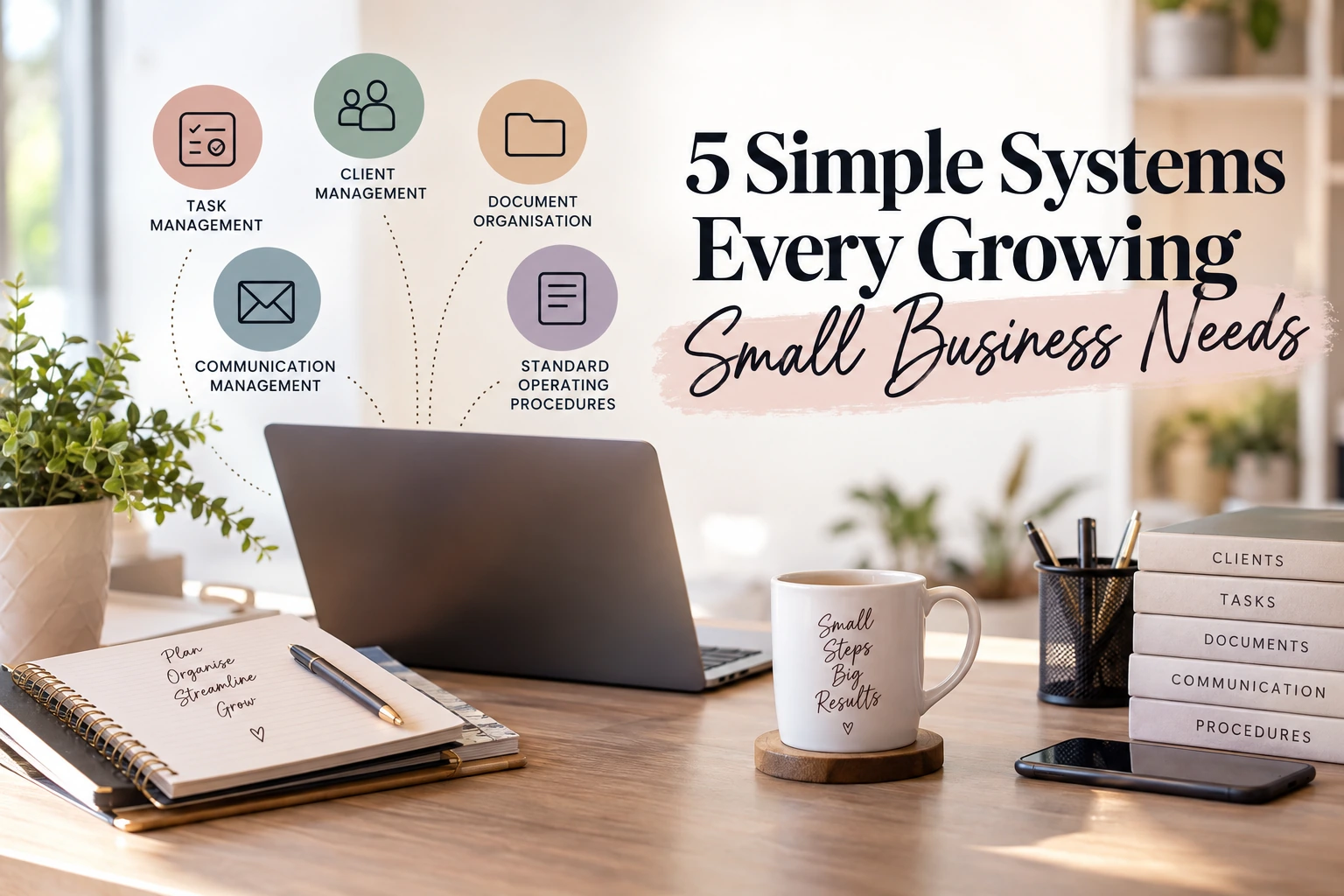
Here are five systems every growing small business should consider putting in place.
1. A Task Management System
If your daily to-do list lives on sticky notes, in your inbox, or somewhere in your head, it's probably time for a better approach.
A task management system gives you one central place to keep track of what needs to be done, who's responsible, and when it's due.
Tools like Asana, Trello, or even a well-organised spreadsheet can help you:
- Keep track of ongoing projects and deadlines.
- Assign tasks when working with a team or virtual assistant.
- Prioritise important work.
- Monitor progress without constantly checking in.
Start simple: Choose one place to manage your tasks and commit to updating it regularly. A system only works when you actually use it.
2. A Client Management and Follow-Up System
Your clients are at the heart of your business, but keeping track of every conversation, enquiry, and follow-up can become overwhelming.
Without a clear system, potential clients can slip through the cracks, important conversations get buried in emails, and opportunities are easily missed.
A client management system doesn't necessarily mean investing in expensive CRM software.
It could be as simple as a spreadsheet that records:
- Client names and contact details.
- Enquiries and their current status.
- Follow-up dates.
- Important notes and next steps.
As your business grows, you can explore more advanced tools that automate parts of this process.
Start simple: Set aside time each week to review outstanding enquiries and follow-ups. Consistency can make a significant difference to your client relationships.
3. A Document and File Organisation System
How much time do you spend looking for a document you know you saved somewhere?
A disorganised filing system might seem like a small inconvenience, but those wasted minutes add up.
Creating a consistent digital filing structure helps ensure important information is easy to find when you need it.
Consider organising your files into clearly labelled folders for:
- Clients and projects.
- Contracts and agreements.
- Invoices and financial records.
- Marketing materials.
- Business operations and procedures.
Cloud-based platforms like Google Drive or OneDrive make it easier to access and securely share documents when necessary.
Start simple: Create a standard folder structure and use consistent file names. Make sure important files are backed up and access is limited to the people who need it.
4. A Communication and Inbox Management System
Communication is essential in any business, but constantly checking emails and responding to messages throughout the day can quickly become a distraction.
Without clear boundaries and processes, your inbox can start controlling your schedule.
An effective communication system helps you manage incoming messages without losing track of important information.
You could introduce:
- Dedicated times during the day to check and respond to emails.
- Email folders or labels for different clients and priorities.
- Templates for frequently sent responses.
- A clear process for identifying urgent requests.
- Guidelines for how and when clients can expect a response.
Start simple: Instead of treating every incoming email as an immediate task, create a routine for reviewing, prioritising, and responding to messages.
This allows you to stay responsive without constantly interrupting your work.
5. A Standard Operating Procedure (SOP) System
One of the biggest challenges for growing business owners is having everything depend on them.
When you're the only person who knows how certain tasks should be done, delegating becomes difficult.
That's where Standard Operating Procedures, commonly known as SOPs, come in.
An SOP is simply a documented set of instructions explaining how a recurring task or process should be completed.
These could include:
- How new clients are onboarded.
- How invoices are prepared and sent.
- How enquiries are handled.
- How social media content is scheduled.
- How recurring administrative tasks are completed.
Your SOPs don't need to be lengthy or complicated. A short checklist, step-by-step document, or screen recording can be enough.
Start simple: Choose one task you complete regularly and document the process. Over time, you'll build a collection of procedures that make your business easier to manage and your work easier to delegate.
Systems Should Support Your Business, Not Complicate It
It's easy to assume that becoming more organised means introducing more tools, more software, and more processes.
But the goal isn't to create additional work.
The goal is to build a business that runs more smoothly, where information is accessible, responsibilities are clear, and important tasks don't fall through the cracks.
You also don't need to implement all five systems overnight.
Start by identifying the area of your business that causes the most frustration or takes up the most unnecessary time.
Improve that one process first.
As your business grows, your systems can grow with you.
Need Help Getting Your Business Organised?
At EA On Demand, we understand that small business owners often know they need better systems but simply don't have the time to set them up.
Whether you need help organising your inbox, creating a filing structure, setting up task management processes, documenting procedures, or managing ongoing administrative responsibilities, we're here to help.
We offer flexible virtual executive and administrative support, including once-off projects, so you can get the assistance you need without committing to more than your business requires.
Because growing your business shouldn't mean carrying every responsibility on your own.
Visit https://eaondemand.co.za to learn more about how EA On Demand can support your business.